


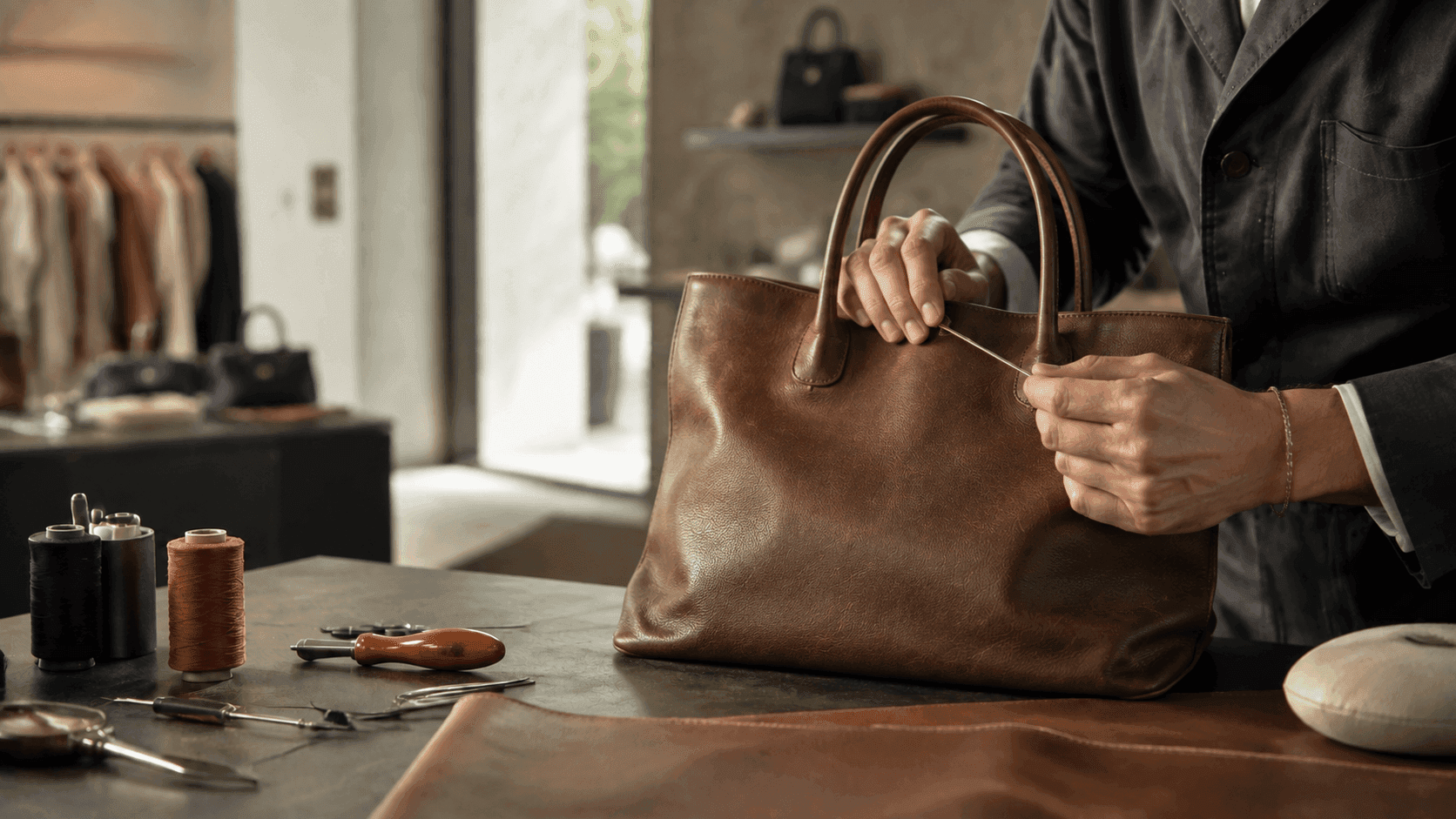
Imagine a customer taking a favourite bag from the wardrobe and finding that the strap has started to split. The bag still looks good, it still feels like hers. But she no longer trusts it to carry through the day.
And she is not looking for a replacement. She wants this bag back.
The moment after the purchase
Luxury brands spend years shaping the moment of purchase: the boutique, the packaging, the handing over of the product. Yet the longer story begins after the product leaves the store. A bag carried every day gathers marks and memories. Its handles soften, its corners wear and, eventually, one small part may stop working.
Some brands have made that later moment part of the proposition. Mulberry reports in its Circularity: Made to Last update that its Lifetime Service Centre repaired more than 9,800 bags in 2024. Barbour's Repair Hub invites customers to send worn pieces for repair and re-waxing. In both cases, care continues after the original transaction.
Policy is moving in the same direction. Directive (EU) 2025/1892 amends EU waste law with harmonised producer-responsibility requirements for textiles. The European Commission's textile-apparel DPP page sets out the work now under way to define the sector's future Digital Product Passport framework.
None of this is what the customer with the damaged bag is thinking about. She is wondering whether the brand that made the first experience feel considered will still be there when the product needs help.
A small fault becomes a brand decision
She checks the brand's website, perhaps searches her account or asks in store. If repair is hard to find, she leaves the brand journey and starts again elsewhere. A worn strap has created a decision about trust, service and whether the original promise still holds.
From there, three things tend to happen:
- the customer has to find and assess a repairer
- the work happens outside the brand's service standards
- the brand loses both the service data and the customer contact
None of these outcomes is dramatic on its own. Together, they turn a straightforward request into a quiet break in the relationship.
The request is the strongest signal
Tingit's France and Lithuania data shows that customers with a functional problem followed through at roughly twice the rate recorded for cosmetic refreshes. Their intent was already clear: they had a product they valued and a specific reason to act.
For the customer, the ideal journey is almost uneventful:
- start the request online or in store
- receive an assessment and a clear price
- track the repair through a brand-connected service
In a boutique, that might mean placing the bag on the counter, explaining the damage and leaving with a reference number. Store teams record the essentials and hand the case over. They do not need to become repair coordinators.
The brand can stay present
A few days later, the customer receives an update. Later still, the bag comes back ready to use. The repair itself may happen elsewhere, but the experience remains connected to the brand. That continuity is what turns an operational service into aftercare.
Tingit manages the customer journey, repair coordination and logistics behind that experience. The brand keeps the relationship and the service standard without building its own workshop.
To learn more about the service, please visit our brands page.